Hot Cocoa Around the World: From American Cocoa to Rich European Drinking Chocolate
Did you know that hot cocoa can be very different depending on where in the world you are? Some versions are light, sweet, and familiar, while others are so thick you can practically eat them with a spoon.
Around the world, chocolate drinks take many forms. Some are made with cocoa powder and milk, others use actual melted chocolate, and some incorporate spices, starches, or even cheese!
Let’s take a little trip around the world and explore how different countries enjoy their chocolate, what makes each style unique, and where Sassory & Co fits into the picture.
First, What’s the Difference Between Hot Cocoa and Hot Chocolate?
In America, we often use the terms hot cocoa and hot chocolate interchangeably. Generally, hot cocoa is made with cocoa powder, sugar, and milk or water, while hot chocolate often uses actual chocolate melted into a liquid.
Cocoa powder provides chocolate flavor without the added cocoa butter found in a solid chocolate bar. Dutch-process cocoa is cocoa powder treated with an alkali to create a smoother, more mellow flavor and a darker appearance.
There are exceptions, of course. The ingredients and preparation matter more than what we call the finished drink.
How Different Countries Enjoy Hot Chocolate
Hot chocolate isn’t just an American winter tradition. Around the world, chocolate drinks have become part of everyday life, special occasions, breakfast tables, and cultural traditions.
Here are some of the most interesting styles.
1. United States – American Hot Cocoa
Think: Sweet, familiar, creamy, and comforting.
For many Americans, hot cocoa brings back memories of childhood, cold winter nights, marshmallows, and those familiar little packets of instant cocoa.
Traditional American-style hot cocoa is commonly made with cocoa powder, sugar, and milk or water. Commercial mixes often contain powdered milk, but not all mixes get their creaminess from milk alone.
Depending on the brand, you may find whey, non-dairy creamer, vegetable oils such as coconut or palm oil, corn syrup solids, maltodextrin, and stabilizers. Some products combine several of these ingredients. Interestingly, a product labeled “non-dairy creamer” may still contain milk-derived ingredients such as sodium caseinate.
The flavor of familiar American cocoa tends to be sweet and approachable, with a lighter chocolate profile. Milk-chocolate-like sweetness is common, although recipes vary considerably.
Texture is generally thinner and more drinkable than many European drinking chocolates.
2. Netherlands – Warme Chocolademelk
Think: Smooth, mellow, cocoa-forward, and comforting.
The Netherlands is closely associated with Dutch-process cocoa, a style of cocoa processing that helped shape chocolate beverages around the world.
Warme chocolademelk, or Dutch hot chocolate, is commonly made with cocoa powder, milk, and sugar. It is generally a smooth, drinkable chocolate beverage rather than a thick, pudding-like preparation.
Dutch-process cocoa gives the drink a different character from some traditional American cocoa recipes, creating a smoother, richer chocolate flavor with less bitterness.
It isn’t necessarily bitter or unsweetened. Dutch hot chocolate can be sweetened to taste, and recipes vary from household to household.
This style is probably the closest comparison to Sassory. Both offer a smooth, drinkable cocoa experience without relying on melted chocolate or heavy cream.
3. Mexico – Chocolate Caliente
Think: Warm spices, cinnamon, traditional cacao, and frothy texture.
Mexican hot chocolate has a history that reaches back much further than the modern European versions of the drink.
Traditional chocolate preparations in Mesoamerica used ground cacao, often combined with ingredients such as corn, chili, and other spices. Over time, chocolate preparations evolved, incorporating ingredients introduced through cultural exchange.
Modern Mexican chocolate caliente is often made with Mexican chocolate tablets, which may contain cacao, sugar, cinnamon, and sometimes other spices. Some versions include vanilla or chili.
The drink is traditionally prepared with water or milk, depending on the recipe and household preference.
One of its recognizable features is its frothy top. A wooden tool called a molinillo is traditionally used to whisk the chocolate and create foam.
Another Mexican chocolate drink worth knowing is champurrado. This is a thicker, heartier chocolate beverage made with masa or corn flour, along with chocolate, cinnamon, and other ingredients. It has a distinctive texture and is often enjoyed with breakfast foods or sweet bread.
Mexican chocolate is a wonderful example of how spices and traditional ingredients can make a chocolate drink completely different from the cocoa many Americans know.
We bring a little of that inspiration into Sassory, too. Our Mexi Coco and Mexi Moco start with our original cocoa blend and add warm spices for a different flavor experience.
4. France – Chocolat Chaud
Think: Rich, silky, luxurious, and deeply chocolatey.
French hot chocolate, particularly the Parisian style known as chocolat chaud, is often made with real melted chocolate and whole milk. Some recipes also include cream.
Unlike a typical American cocoa mix, the chocolate itself is a major part of the drink.
The result is often rich, smooth, and silky, with a deeper chocolate flavor. It can be sweetened, but good-quality dark chocolate frequently provides much of the character.
French chocolat chaud is often served in smaller portions because of its richness.
It is a popular café-style indulgence, sometimes enjoyed alongside a croissant or other pastry.
While it can be thick, it is generally more fluid than the dense chocolate drinks made specifically for dipping.
5. Spain – Chocolate a la Taza
Think: Thick, rich, intense, and made for dipping.
Spain takes hot chocolate in a different direction.
Chocolate a la taza is a traditional Spanish drinking chocolate known for its thick consistency. It is commonly made with chocolate, milk, sugar, and often a starch such as cornstarch to create its characteristic texture.
It is famously served with churros, which are dipped into the thick chocolate.
Unlike a typical American mug of cocoa, this isn’t necessarily a drink you casually sip while reading a book. Its consistency is part of the experience.
The chocolate can be rich and intense, although sweetness varies by recipe and the chocolate used.
Spain is one of the best examples of how a hot chocolate drink can move beyond being simply a beverage and become something closer to a dessert.
6. Italy – Cioccolata Calda
Think: Velvety, dense, decadent, and almost pudding-like.
Italian hot chocolate is another style that takes thickness seriously.
Cioccolata calda is commonly made with milk, chocolate or cocoa, sugar, and often a little cornstarch to create a thick, velvety consistency.
Some preparations use melted chocolate, while others combine cocoa powder and chocolate.
The result can be remarkably dense. Depending on the recipe, it may be closer to warm chocolate pudding than what most Americans would consider a regular cup of hot cocoa.
Italian hot chocolate is generally served in smaller cups and enjoyed slowly.
Although Spain and Italy both have thick drinking-chocolate traditions, the recipes aren’t identical. Both can be excellent examples of rich, concentrated chocolate drinks, with the exact texture depending on the preparation.
7. Belgium – Belgian Hot Chocolate
Think: Real chocolate, smooth texture, and luxurious flavor.
Belgium is internationally known for its chocolate-making tradition, so it’s no surprise that its chocolate drinks often emphasize the quality of the chocolate itself.
Belgian-style hot chocolate frequently uses real chocolate melted into warm milk. Depending on the recipe, dark chocolate, milk chocolate, or a combination may be used.
The result is generally rich and smooth, with a fuller mouthfeel than a basic cocoa powder drink.
The sweetness and intensity depend heavily on the chocolate selected.
Belgian hot chocolate is a good example of how the type of chocolate, rather than just the amount of sugar or milk, can completely change a drink.
8. Austria – Viennese Hot Chocolate
Think: Rich cocoa, creamy milk, and a generous topping.
Austria has its own café tradition, and Viennese hot chocolate reflects the country’s love of elegant, indulgent beverages.
Recipes vary, but Viennese hot chocolate is commonly made with cocoa or chocolate, milk, and sometimes cream. It is often finished with a generous serving of whipped cream.
The whipped cream adds another layer of richness and creates a beautiful contrast with the warm chocolate underneath.
Unlike the very thick Spanish or Italian preparations, Viennese hot chocolate is generally served as a drink with an indulgent topping.
It’s a little bit of chocolate and a little bit of dessert.
9. Colombia – Chocolate Santafereño
Think: Creamy, sweet, and surprisingly savory.
Colombia offers one of the more unusual chocolate-drinking traditions.
Chocolate santafereño is a traditional hot chocolate served in parts of Colombia, particularly around Bogotá.
It is commonly made with chocolate tablets melted into hot milk or water and whisked until frothy.
But here’s the surprise: it is often served with cheese.
Small pieces of mild cheese, such as a fresh white cheese, are placed in the bottom of the cup or served alongside the drink. The cheese softens and melts into the hot chocolate.
It may sound unusual to someone who has never tried it, but the combination of sweet chocolate and mild, salty cheese is a familiar comfort-food pairing in Colombia.
It’s a good reminder that chocolate drinks don’t always have to follow the sweet-only rules we might expect.
10. Argentina and Uruguay – El Submarino
Think: Hot milk and a piece of real chocolate.
El submarino is a popular chocolate drink in Argentina and Uruguay.
Rather than starting with cocoa powder or a prepared chocolate mix, the drink is made by serving a piece or bar of chocolate alongside a cup of hot milk.
The chocolate is placed into the hot milk and stirred as it melts, creating a personalized cup of hot chocolate.
The name translates to “the submarine,” referring to the chocolate sinking into the milk.
It’s a simple preparation, but a fun one. The drinker gets to watch the chocolate melt and control how strong or sweet the finished drink becomes.
11. Philippines – Tsokolate
Think: Traditional cacao, bold flavor, and a rich cultural history.
The Philippines has its own chocolate-drinking tradition known as tsokolate.
One traditional ingredient is tablea, which consists of roasted and ground cacao formed into tablets or discs.
The tablets are melted into hot water or milk and whisked to create a chocolate drink.
Depending on the region and preparation, tsokolate can range from relatively thin to thick and velvety.
A traditional wooden whisk called a batirol is used to mix and froth the drink.
Tsokolate is often enjoyed during breakfast or special gatherings, sometimes alongside traditional breads and pastries.
It is a wonderful example of a drink that keeps the flavor of cacao at the center rather than relying on a sweetened powdered mix.
Comparing Hot Chocolate Styles Around the World
Now that we’ve taken a trip around the world, let’s put the differences into perspective.
These are general descriptions of representative preparations. Recipes vary by household, region, and personal preference, so this isn’t a ranking or a strict set of rules.
| Country or style | Typical sweetness | Chocolate base | Dairy | Texture |
|---|---|---|---|---|
| United States | Medium-high to high | Cocoa powder | Milk or dry milk | Light |
| Netherlands | Moderate | Cocoa powder | Milk | Smooth |
| Mexico | Moderate | Cacao tablets or chocolate | Water or milk | Frothy |
| France | Low to moderate | Real chocolate | Whole milk, sometimes cream | Silky |
| Spain | Varies | Drinking chocolate | Milk or water | Very thick |
| Italy | Moderate, varies | Cocoa and/or real chocolate | Milk | Very thick |
| Belgium | Varies | Real chocolate | Milk | Rich and smooth |
| Austria | Moderate | Cocoa or chocolate | Milk or cream | Creamy |
| Colombia | Moderate to sweet | Chocolate tablets | Milk or water | Frothy |
| Argentina / Uruguay | Varies | Real chocolate | Hot milk | Adjustable |
| Philippines | Varies | Ground cacao tablets | Water or milk | Thin to velvety |
There is no single recipe for hot chocolate around the world. Some styles are built around sweetness, others around the chocolate itself, and still others around texture and tradition.
The ingredients determine the experience.
And that brings us to another question: Where does Sassory fit?
Where Does Sassory & Co Fit in the World of Cocoa?
Sassory wasn’t created to reproduce a traditional Dutch recipe, an American hot cocoa, or a European drinking chocolate.
It started with a different goal.
I wanted the dark chocolate flavor to be the star.
When I began developing the original Sassory cocoa blend, I wanted something that was smooth and creamy but had a deeper, more pronounced dark chocolate flavor than the typical sweet cocoa many of us grew up drinking.
I wasn’t trying to make a cup of melted chocolate, either. I wanted a really good cup of cocoa.
That meant being intentional about every ingredient.
Why We Let the Dark Chocolate Flavor Shine
The cocoa comes first.
We use Barry Callebaut Extra Brute, a premium Dutch-process cocoa powder with a 22–24% cocoa butter content.
It has a rich, dark cocoa character with roasted, woody, and subtle spicy notes. Its higher cocoa butter content also contributes to a smooth, rounded mouthfeel.
This was an intentional choice. I wanted a cocoa that celebrated dark chocolate flavor, not one where the cocoa got lost behind sweetness and milk.
Two sugars, each with a job.
White sugar provides straightforward sweetness. Brown sugar brings additional depth and a subtle molasses character.
Using both helps balance the sweetness while allowing the cocoa to remain prominent.
Creaminess without turning it into milk chocolate.
Milk is important in a good cup of cocoa, but too much dairy richness can compete with the chocolate flavor.
That’s why I chose low-fat dry milk instead of a full-fat milk powder or cream-based formula.
It gives Sassory a smooth, creamy foundation while keeping the dark cocoa flavor front and center.
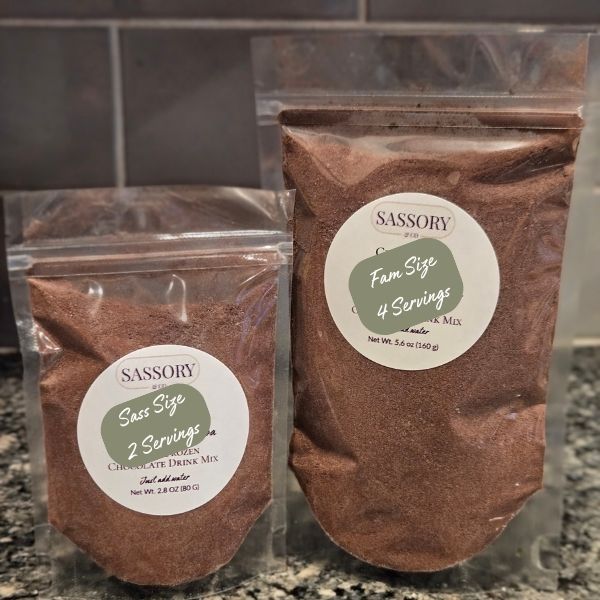
And because the milk is already in the mix, you simply add water when preparing it. No need to add milk to get a creamy cup.
Every ingredient was selected with the same goal in mind: let the dark chocolate flavor shine.
Is Sassory American, Dutch, or European?
Our cocoa does use Dutch-process cocoa powder, a style of cocoa processing closely associated with the Netherlands.
But using Dutch-process cocoa doesn’t automatically make a drink Dutch hot chocolate.
Sassory is its own recipe.
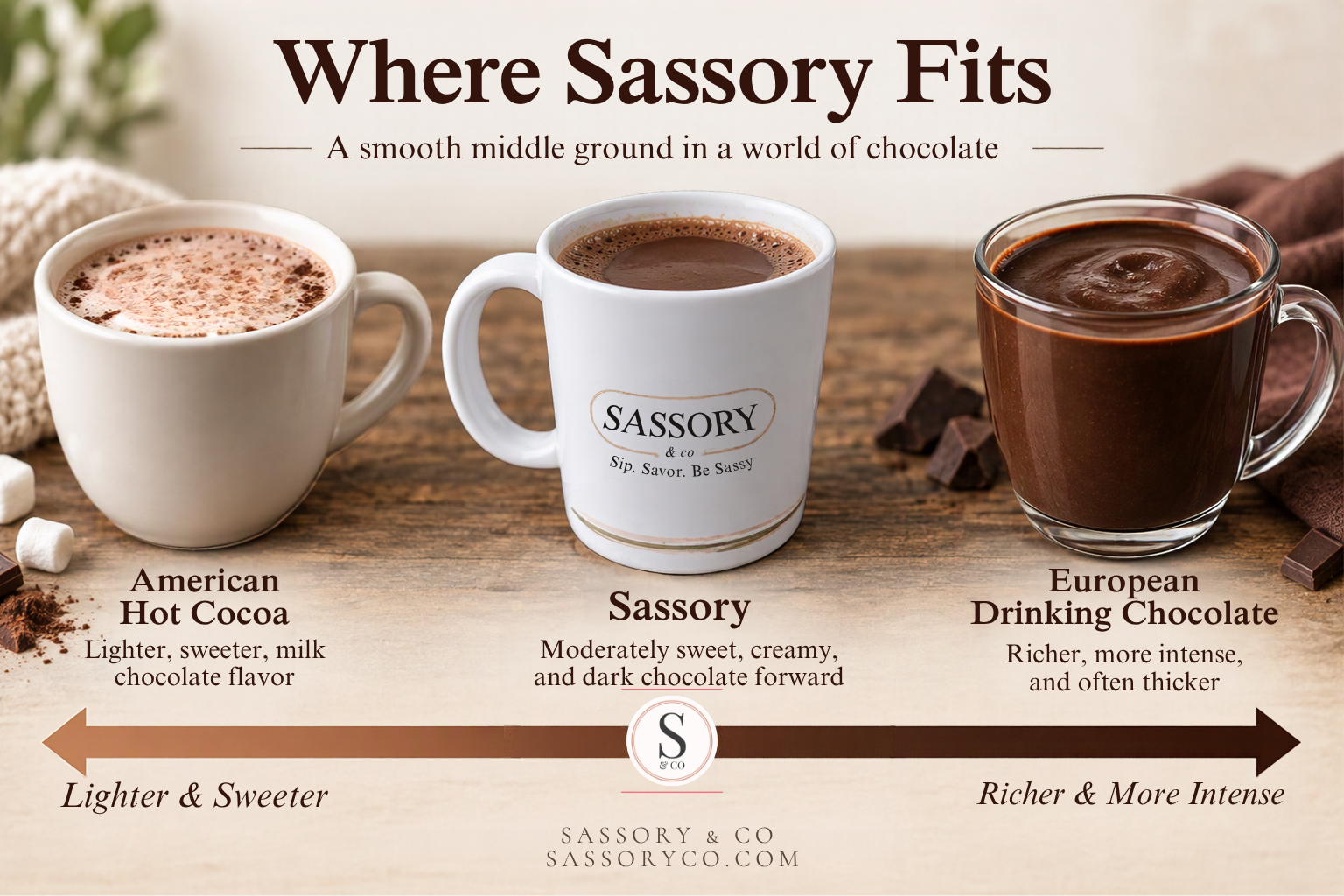
It has the convenience of an American-style powdered cocoa mix, the smoothness of Dutch-process cocoa, and a darker, more pronounced chocolate flavor.
It isn’t the thick, melted-chocolate experience of Spanish or Italian drinking chocolate.
And it isn’t the lighter, sweeter cup of cocoa many Americans grew up with.
It’s somewhere in between.
Not quite American. Not quite European. Just Sassory.
A Different Kind of Cocoa to Cozy Up With
There’s something special about wrapping your hands around a warm mug of chocolate on a chilly day. But a cozy cup doesn’t have to be overly sweet, heavy, or thick enough to eat with a spoon.
Sometimes you just want the real flavor of cocoa.
That’s what Sassory was created to deliver: a smooth, creamy, easy-to-enjoy cup with a pronounced dark chocolate flavor that doesn’t rely on melted chocolate or heavy cream to make an impression.
It’s a little more grown-up than the cocoa you may remember from childhood, without losing the comfort that makes a warm chocolate drink so enjoyable.
Whether you’re settling in with a good book, taking a break from a busy day, or simply craving something chocolatey, Sassory gives you a reason to slow down and savor the moment.
Dark chocolate flavor. Balanced sweetness. Quality ingredients — Intentionally Made.
Ready to experience cocoa with a little more character?
Explore the Sassory & Co cocoa collection and find your new favorite way to savor chocolate.